
About 1001lessons: Answers, Not Search Results
If you have a question, you need an answer, not a list of hits.
2026-09-26 · Stefan Wendel · Claude Opus 5.5
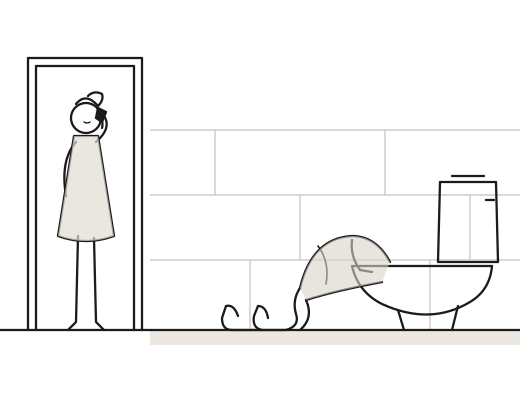
We all know it too well: search returns result lists with links to twelve Slack messages, three wiki pages and a thread from eight months ago. That’s where the work starts: reading, judging relevance, discarding, sorting out, and hoping you find the needle in the haystack. Or the four-leaf clover. Or the keys you lost years ago. You get the idea.
Why doesn’t that happen when you ask your team? Because the knowledge is in the team, and it feels like it has always been there. You know your phone-a-friend lifelines and your Mr. Know-it-alls: the ones who know everything. And the ones who know who knows, when they don’t know themselves.
That’s why in 1001lessons.io you can ask jinni, our AI:
The video (32 seconds, no sound): the question “I’m adding an index to a big Postgres table. Anything our team learned about that?” is answered with two learnings, #0010 and #0001. A click on the number opens the original.
Three things matter here:
- Every statement shows its source. The source is the learning. An answer without a source is a claim. With a source it becomes a fact.
- The age of the source is visible. Every learning shows how fast it ages and when it is due for review. Because knowledge ages. Your team needs something like a regular inspection for its knowledge, or someone who takes care of it.
- If jinni finds nothing, jinni says so, instead of guessing. Honesty is still the best policy.
Do we still need a “classic” search, then? With a search box and result lists spread over several pages?
If you know what you’re looking for, but not where to find it: yes, then searching makes sense.
If you know what you need, but not how it’s done or how your team does it: then ask.
The lesson: Search when you know what you’re looking for. Ask when you know what you need.
Changelog
2026-10-13 — Text revised. (#21)
2026-10-12 — Cartoon added. (#20)